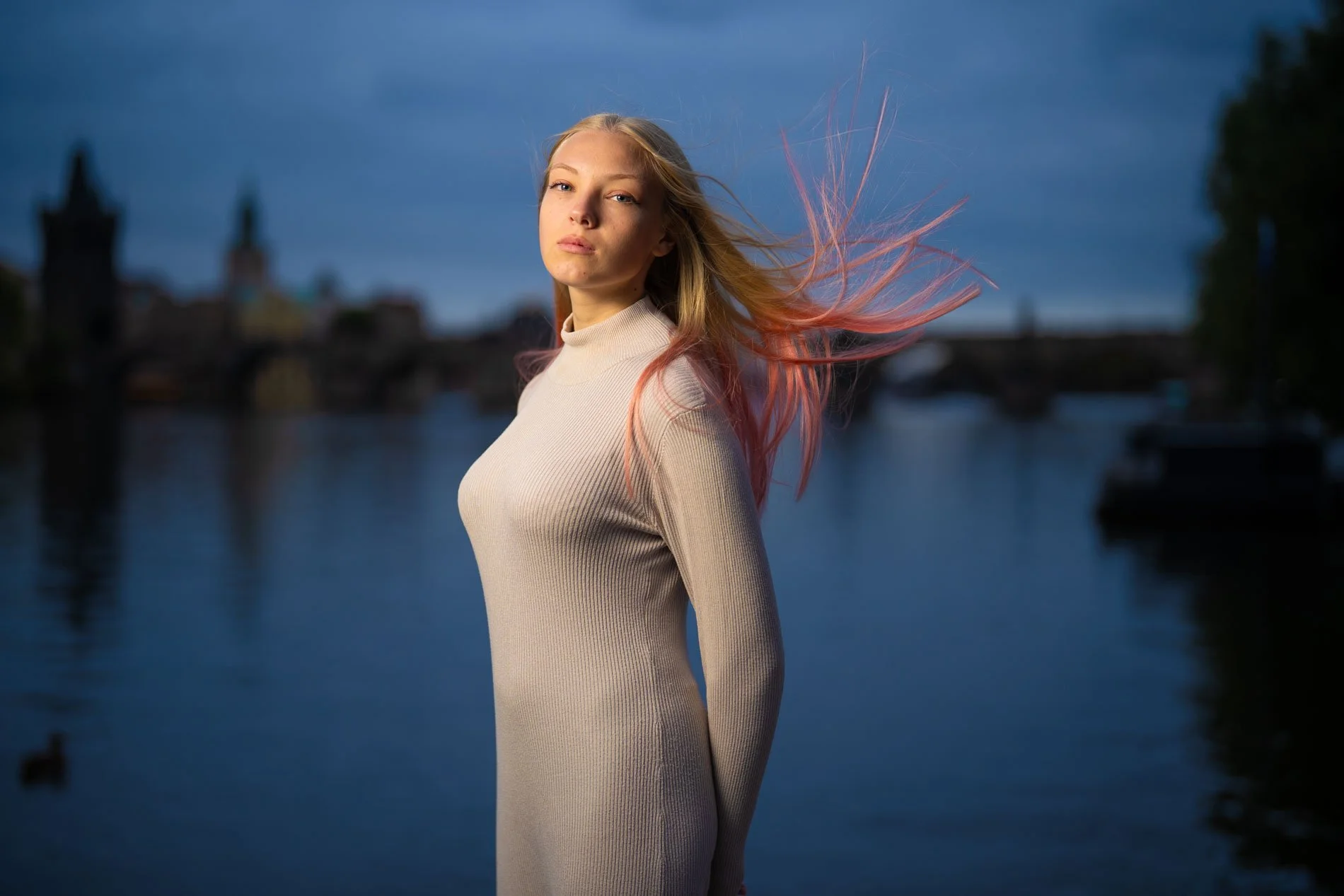
Portraits of Resilience
Art, Survival, and Belonging Among Displaced Ukrainian Youth
Regina was 15 when Russian troops invaded her city in east Ukraine. She and her mother survived amidst the flying bullets and bombs for a month and a half. They saw everything – the destruction, the fear, the silence that followed each explosion – until their city was destroyed. They had to flee.
At 16, Regina moved to the Czech Republic, alone. She is one of over 110,000 Ukrainian youth who fled to this nearby country. They had to adapt quickly, learn a new language and culture, navigate bureaucracy, find shelter, and find a way to continue their education.
On top of the constant stress of being a refugee, many of these youth face discrimination and ridicule. They also wake up to news feeds filled with images of the latest Ukrainian destruction, and hope that their families and villages survived another night of missile and drone attacks. Many relive their trauma every night during fitful sleep.

For Regina, her main form of dealing with this stress is to dance. “Dance helps me overcome the fear,” she says in her quiet voice. Another dancer, Natalia, told us, “Through dance, I can express emotions that are too deep for words.”
“Ukrainians are very expressive,” says Oksana Dolga, a Ukrainian living in Prague for several years. “After leaving Ukraine due to the war, many youth felt lost and depressed without the arts. But when they were able to find a way to make art again – to have self-expression – it brought them back to life, improved their mental health, and brought a sense of normality to an abnormal situation."
This project focuses on telling the stories of displaced Ukrainian youth who have made creativity part of their lives. Pursuing an art form has helped many of them find comfort and purpose in the midst of chaos. For some, it also provides a bridge to new friendships and helps them integrate into Czech society.
For Hanna, music has been a way to build community and create respite for other refugees. For Denys and Makovka, acting connects Ukrainians and Czechs through storytelling and theater. For Valerii and Anastasia, the competition of speedcubing or ballroom dance has given them something positive on which to focus their time and energy. For Regina, dance is a way to not only deal with her fears, but to inspire others.
Reading their stories makes it clear that few of these young people want to be defined as “refugees.” While there is an underlying element of sadness and loss, most of them are focused on working hard, making the most of their opportunities, finding ways to serve others, and creating a better future for themselves.
Throughout Europe, Ukrainian refugees face increasing suspicion and discrimination fueled by Russian propaganda, making their struggle not only to survive, but to be seen and understood, even more difficult. At a moment when public attention is shifting and empathy for refugees is waning, these voices remind us that war is not abstract. It shapes the lives of individual young people – each still trying to grow up, to dream, to build a future – even while carrying the burden of their trauma and loss.
A Note to Editors / Curators:
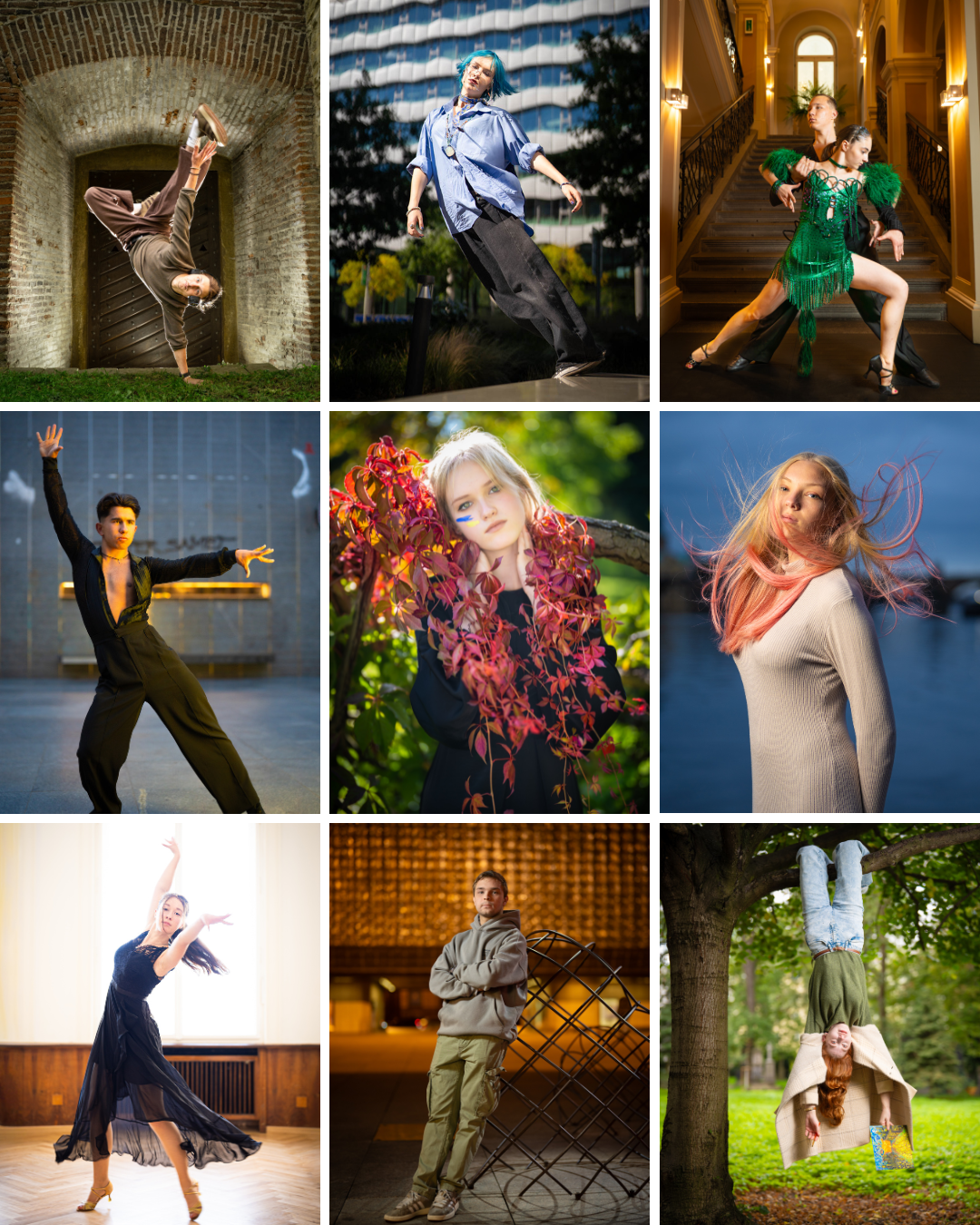
This gallery presents the images and stories of Portraits of Resilience, featuring Ukrainian teen artists living in exile in Czechia. The work was created in late 2025, and is currently unpublished.
Signed GDPR/Model Release forms are on file for all subjects.
Behind the scenes footage is available.
A thematic or sequence-based edit can be tailored for specific editorial or exhibition needs.
To view the stories, please click on the quotes beneath each image.
-
Basically, my life is a cycle of falling and getting back up.
In Ukraine, I studied art at school and attended an art studio on weekends. I had many dreams and plans. …And then the war began.
We left by evacuation train, and – after my passport – my art supplies were the second thing I put in my suitcase.
For the first year in the Czech Republic, I couldn’t accept how unstable everything had become. The hardest part of all was finding friends. Even my Ukrainian friendships were difficult – we all tried to support each other, but everyone had their own problems: someone’s home was destroyed, someone was in an unsafe family situation. Relationships based only on complaints don’t last long. Many of my old friends moved away; everything was shifting all the time. For a 14-year-old girl who was still looking for herself, it was too much.
I missed my art school so much that I enrolled in one in Brno. It felt good to finally be pursuing art again, and to be able to share my thoughts through painting, drawing, and acting.
In 2023, I was selected for a youth exchange program in the U.S. called YouLead2023. While there, I met an organization that provides free prosthetics to Ukrainian soldiers who lost limbs. I donated three still-life paintings of traditional Ukrainian food to a charity sale, and they sold for $1,000. In this way, I feel like my art helps not only me, but others who are also struggling to rebuild their lives.
~Marharyta, 17
-
I grew up in a small village, in a poor family. We lived a humble life, and sometimes it was very hard. From an early age, I had to work on the farm, look after my younger nieces, and sell milk at the market.
I went to Czechia because of the war, but also because I saw it as the only option to support my family in difficult circumstances. I came all by myself, one day after Christmas. Was it scary? Very much so. Does it hurt? Yes, deeply. Did I ever want to drop everything and go back home? I still do.
It’s not easy to keep working when you have no strength left, when your health fails and you still must earn money. It’s not easy to miss your family, lose your grandfather, and not be allowed time off to attend the funeral. It’s not easy to study and work without sleep. It’s not easy to know that your brother and brother-in-law are injured because they are fighting, and you can't even visit them, even when you know that every day could be their last.
Also, my disabled parents are older and I am aware that our time together is shortening. But if I return home, I won't be able to provide for them or protect them.
So, I cry every night, and in the morning I go to work and smile.
Fortunately, there is something that always helps me keep going: art and creativity. They have been my source of strength and hope since childhood.
I love to draw, to sculpt, to decorate with ribbons, weave corn leaves, embroider, knit, paint. Art gives me the opportunity to show my true inner self. For me it is a place where you can speak without words – a space without borders, restrictions, or rules, where you can be whoever you want to be. Where you are both the author and the hero of the story. Art helps distract me from sadness and burnout, and remember that there is still beauty in the world.
Despite all I’ve been through, I continue to believe that not all people are bad. I believe that each of us can make the world a better place, through simple acts of love: to compliment, to support, to advise, to heal people with words and deeds. This is why I chat with other struggling Ukrainian people online, utilizing my psychology degree to freely offer help and encouragement where it is needed.
When my world is upside down and crazy and gray, and I think will it always be like this? – creativity and kindness come to the rescue, pull me out of depression, and add color back into my life.
~Katya, 23
-
The first months after moving abroad, I didn’t believe I could find myself here. I had no dreams and no purpose. Like millions of young people in Ukraine, at seventeen I had to grow up in a single day.
I remember when I first drove through Prague, I thought: how happy these people are – they can just walk calmly, enjoy their coffee and the city. But not me.
At that moment, it felt as if everything had been taken away from me, and I didn’t know when I would feel that same freedom again. I was looking at the bustling city like a colorful painting, but inside I felt only the darkness of deep pain and confusion.
In January, my close friend was killed in the war. I still hear his voice in my thoughts, I miss him deeply, and I love him very much.
Only a few weeks ago, our family was shaken by more tragic news – the death of a close family friend. His body still cannot be returned home to his loved ones. This is the terrifying reality in which Ukraine lives today.
Art has been my comfort and my motivation to keep moving forward. There were periods when I had no inspiration at all, but over time it returned, and I could spend whole days working on interior designs or writing poetry.
I’m making the most of this opportunity to work and study abroad. In the future, I aspire to apply my knowledge as an architect to Ukrainian projects, for the growth and flourishing of my country.
We are an ambitious and determined nation. Among Ukrainian soldiers, there are countless talented people: artists, writers, musicians, dancers, actors. And despite everything, they keep fighting for the right to create, to live, and to love. Even far from home, I can feel this pulse, the thirst for life, freedom, and light.
-
Before the war I spent a lot of time in nature – fishing, picking mushrooms and berries – and in creative things like knitting, embroidery, and drawing. I also juggled, grew cacti and succulents, and competed in swimming and judo.
In retrospect I can say that it was the best time of my life because I was spending it with my friends and family.
The trip to Czechia and my beginnings here were an intense experience. I had to move for work several times and lived in Germany for a while. Finally, I found my anchor in the Czech town of Turnov, a place near to my heart because of its incredible nature and spiritual vibe.
As for my art: I got a lot of inspiration while in Czechia and was very motivated to try to create something new and unique. I started to paint ancient Slavic symbols filled with strength and positive energy. I painted them on paper, stone, and on clothes which I made myself.
My clothes never stay on my shelves for long. I give them all away. Seeing someone wear what I’ve created, being happy and grateful, is my greatest joy. It is important for me not only to create, but also to spread creativity.
My biggest dream of course is to return to my homeland in peace. I realize now more than ever that you can acquire any material wealth, but you can't get time and people back. In the end, no one knows how long we have been given to live in this world, so we need to appreciate every day and every opportunity we have.
~Serhii, 20
-
I arrived in the Czech Republic two weeks before my 14th birthday. Leaving home and moving to another country is scary. I was very stressed every day but tried to adapt as quickly as possible.
To learn the language I decided to go to a dance school. I had studied ballroom and modern dance (and piano and voice) back in Ukraine, but in my new Czech city there were only Caribbean dance classes. So I joined the school, and was surrounded by 15 girls and two coaches who only spoke Czech.
Out of curiosity and kindness, the girls and coaches taught me Czech and asked me to teach them Ukrainian. They wrote and talked with me a lot, telling me what things were called, helping me learn new words and phrases. Having made many new friends there, I learned not only to listen but also to talk – to become more communicative and open.
As a refugee, dance became the common language we shared, even before we could share words.
~Anastasia, 17
-
When the war began in 2022, I was 15. My mother and I stayed in our city for a month and a half, in the very center of active fighting. Every day we faced death, as shells struck the city every twenty minutes. We saw everything – the destruction, the fear, the silence that followed each explosion – and we tried to stay alive. In that time our city was completely destroyed. Eventually, it became impossible to survive: there was no hot water, no gas, no light, no electricity. We were left with no choice but to flee.
We managed to move to a larger city in Ukraine, where the situation was not as dire. Big cities were harder to hit with artillery, so there were mostly rocket and drone attacks, and our chances of survival were higher there.
I moved to the Czech Republic when I was sixteen, completely on my own. My mother stayed behind in Ukraine, so I had to build my life here from nothing. It was difficult, but I managed, because there was simply no other choice. I moved into a home for at-risk youth; according to the rules, it wasn’t for refugees, but the staff decided to help us because there happened to be free spaces.
While the war was horrible, what causes me much deeper emotions are everyday life problems, like expressing my feelings to others. Dance helps me overcome the fear: it’s easier for me to show my feelings through the language of movement. But at the same time, dance is also my biggest fear, because I have to learn to show what I truly feel, to not be ashamed of who I am.
I want to stop being afraid to try, afraid to talk about myself, afraid to live. I want to be that lady that inspires other people. I want to know that my words can help someone. I’m a super sensitive and vulnerable person; I always want to help others, yet while I do that I carry my own problems inside.
For me, dance is what keeps me alive – but at the same time, it destroys me. I’ve never experienced as much stress and emotion in anything else. When I dance, I put everything I have into it – all my emotions. Sometimes, it helps me release them, but other times, it breaks me even more.
BUT I CAN’T LIVE WITHOUT IT.
~Regina, 19
-
One day I heard explosions, and my life turned upside down. My family tried to wait it out, but we couldn't just sit in the basement all the time. So we fled on an evacuation train – it was the scariest trip I've ever been on. The carriages were crammed with people, many in serious condition. The train stopped often because of loud explosions.
It was an extremely difficult trip, but it took us to Lviv. Even there the war did not let go of us; very quickly we realized that we had to move on. That's how we ended up in the Czech Republic.
Integration into a new country with a new language was extremely difficult. We had lost so much: our home, our culture, and everything that brought us joy.
One day my mom found a dance group in Prague, and she signed us up (I have been dancing since I was three years old). We also found a vocal teacher from Ukraine – Olga Bachko – who created a vocal group for children. We sing our native songs, and perform on stage, telling the world about our wonderful country. Our performances have even raised funds to help Ukraine; I am very proud of this.
I’ve also won many dance awards. Dancing helps me show everything that lives in my soul; it gives me strength and confidence, and helps me stay in touch with myself. Thanks to these things, I have been able to survive the transition and trauma, and have hope.
Despite everything that’s happened, I try to look to a bright future. Music and dance have become my support and voice through which I tell my story.
~Yaroslava (13) and Arina (14)
-
I want people to understand how difficult it is to be far from home, from people close to you. It is very difficult to leave everything and start your life anew.
At the age of 17, I had to suddenly become a ‘real’ adult. Moving to another country on my own brought a whole new level of responsibility. Without knowing the language, I had to fill out all the paperwork, get insurance, find somewhere to live, and somehow arrange my life without the help and advice of my family.
Immigrants and refugees are almost constantly under stress. The stress is constant, and without realising it, a person becomes very tired.
After learning Czech to level B1 in just over 3 months, I enrolled in the university. I never encountered racism at university; if you ask for help, you will definitely get it, but you still feel like you don't belong. There were small details like cultural customs, memes, songs, jokes, and cult things that I just didn’t know. But these small details add up to a big wall that prevents you from fitting into the community.
Martial arts taught me discipline, and the ability not to panic or fear in stressful situations.
Discipline helped me understand what I should do in life, what my goals are, and helped me resist the temptations of ‘adult life’ and the sudden freedom that came my way. I watched other teens delve into drugs and other substances in the absence of control.
In spite of the constant stress, martial arts have helped me to keep my sanity. I can adapt to unexpected situations, and control myself in them. Thanks to mastery of this art, I have found friends, education, and work.
~Kirill, 21
-
We put our whole life into three backpacks. The evacuation train was crowded, filled with children from an orphanage who were rescued from the shelling; there was no way to take many things. As we rode that train, we saw the explosions for the first time.
My family reunited in Prague, where I had to start all over again. This was not just a move – it was the beginning of a new life from scratch in a foreign country. But I learned to adapt, to see new beginnings where others might see endings, and to build something beautiful out of change.
Since childhood, I had been drawn to understanding how nations speak to one another, how ideas move across borders, how peace is built from dialogue. I would pore over books about wars, alliances, and politics. So when I came to Prague, I took intensive Czech language courses. I completed an online bachelor's degree in Ukraine with two majors, and have now entered a Czech university, studying international relations.
What once felt like an impossible dream – a girl from a small town in Ukraine imagining herself in the heart of Europe – has become my reality. I’m turning that childhood fascination into a purpose that guides me forward.
For me, resilience isn’t just surviving – it’s transforming. It’s about connection, creativity, and the quiet courage to keep believing in what’s possible.
~Valeriia, 23
-
When the full-scale invasion started and I was hiding in shelters, crossing cities, leaving the country, writing felt almost offensive. You don’t describe things poetically when you’re trying to survive them, right? For a long time, I couldn’t find the strength to create anything: I felt like a doll being torn in different directions, losing all its content.
But I began to notice that silence doesn’t protect me — it only erases the record of what’s happening to me. The longer I stayed quiet, the less real everything became. I was losing contact with the part of me that could still notice and feel. When I began writing again, it wasn’t about expressing myself; it was about testing whether I could still feel anything beyond survival and fear.
Writing was my way of reclaiming the voice the war had tried to take away.
In the end, that’s what art is for me: a way of keeping my voice alive when everything else insists on silence. Art doesn’t restore what’s lost, or protect me from reality. But it does help me remain present — to keep seeing and speaking, even when silence tries to disguise itself as peace.
~Maria, 21
-
When I evacuated to the Czech Republic at 12 years old, it was very difficult for me. I lost all my friends and my ‘normal’ life. Thankfully, through some organizations that support Ukrainian refugees, I got to know other refugees, attended workshops, danced, and received psychological support. It was very helpful and made things easier for me.
I am proud of the fact that I have been dancing for 10 years. Even in another country, I found places where I could dance. I will never leave it.
Dance is the language of the body. Through it I can express emotions that are too deep for words.
In this photo, I am calm and focused. This movement is about balance and self-confidence, like when everything seems difficult, I can still hold on and find my balance.
~Natalia, 16
-
On the first day of the war, I was 10. I wasn’t really scared, because I didn’t understand what was happening. A few days after the fighting began, though, my mother decided we had to leave immediately, because constantly hiding in a basement wasn’t safe anymore.
Saying goodbye to my father was the hardest part. They wouldn’t let him cross the border. I cried for a long time, and my mother tried to calm me and my little sister. We were taken to a tent full of refugees with children and animals, and eventually we left for the Czech Republic.
At the time, everyone told me it would be short-lived and that we would soon return home. But we’ve been here for years now. I still keep in touch with my father, who writes to me every day.
I’ve learned that you have to be mentally strong, because you literally lose everything, so quickly.
For two years now, I’ve felt myself drawn to filming and acting. I really like the way actors convey emotions and get into character, and I also love the chance to dress up and stand out. My favorite movie is Dead Poets Society, and I think the actors do an amazing job, especially in the sad moments. For me, acting isn’t just a teenage dream; l strive for it whenever I have the opportunity. And I’m confident that I’ll achieve my goal.
~Arina, 14
-
Leaving Ukraine was one of the hardest decisions of my life. My parents decided that it was better for me to go abroad, because Odessa was becoming more and more dangerous.
So I came to Prague alone at 17, and I had to become an adult in one moment – handling documents, courses, housing, and work on my own. Just four months after moving, I entered Charles University to major in Political Science and International Relations. The first year was incredibly difficult; the hardest part was realizing that I was completely alone in a foreign country, and I was worried about my family in Odessa.
Music is my passion. At first, I couldn’t make art after coming from Ukraine, because I hadn’t been able to bring my instruments with me, and I didn’t have money for a guitar. But when I did, art became a kind of catharsis for me – a way to pour emotions into something beautiful, and share them with friends and listeners.
I play drums, guitar, and bass in a couple of bands. Together with my friends, I am organizing a community called The Nest, where we host evenings for anyone to share their art: musicians, poets, dancers, visual artists, and more.
I really miss my family. It is especially difficult because of what they are going through in Odessa right now. I pray every day that they are alive and well. But I do feel at home in Prague now; the city offers so many opportunities in the music I love.
I’ve learned to keep believing in myself and my unique gifts. Each person is unique, and this is what makes us beautiful.
And another thing I’ve learned: after thunder and rain, the sun always comes out.
~Ruslana, 21
-
I moved to the Czech Republic during the second year of the war, when I was 17 years old. My parents did not have the opportunity to leave Ukraine and did not want to leave their home, farm, and family, so they sent me abroad. My guitar was the first thing I packed.
For me, creativity is not a way to run away from problems, creativity is the meaning. People like me are happy when something happens to them, because then I can write a song about it.
In my music I want to describe the unique experience of Ukrainians in the Czech Republic. In one of my songs I wrote, “In this country, my blue passport turned me into a migrant gray mass.” Even though I’m in a foreign place, and I often feel like a white crow or a blue orange, I really do like the Czech language and culture.
I am very grateful to the Czech Republic for including therapy sessions in our medical insurance, to help with our mental health. This is so important, because the most difficult thing for me has been to appreciate and see the good in life, in spite of all the bad weather. There is never a perfect day; something always happens. The main thing is to notice and remember the good moments.
I keep a diary where I write small joys, a camera on which I record happy moments, and I see my psychologist to help me with this. I’ve learned that no one will make me happy except my own self-care.
~Illia, 17
-
I have warm memories of how I went out to the fields with my friends. It was incredible, the plants changed from year to year: sometimes sunflowers, then wheat. The feeling of the wind on my face, the sun and grass – this is the picture of Slobozhanshchyna, the northeast region of Ukraine, on the Russian border, where I am from. This is the flag of Ukraine before your eyes.
Right before the full-scale invasion began, I didn't believe it was even possible. I turned 17 on February 11, and I could not imagine that the Russians would start killing our people.
Since then, my February has lasted more than one thousand three hundred days.
***
No one should have to accept–at the age of 17–the possibility of her death in a couple of seconds from a Russian missile. After several nights under shelling, we decided to go to the Czech Republic, to my uncle and mother, who already lived here. We hastily packed our things into a backpack and 2 bags, and left. I've taken pictures of everything in my life, but I didn't take pictures of my house when I left. I didn't want to remember it so gray and tired.
After a very difficult year and a half of adaptation in Czechia, I was finally able to make art again. I was also able to enter the Kharkiv State Academy of Design and Arts with a scholarship! Later, I found a company of Ukrainian students here in Brno, and for the first time in a year and a half I was not alone.
My art is colorful and multifaceted, like myself. I take photos, make collages, shoot videos, edit, do make-up, write texts and poems, and weave silyanka (traditional Ukrainian jewelry).
I am most proud of my photo project “I Dreamed of a House Again.” I’ve also been very involved in the theater production "Until the War Ends,” where I have been a director, screenwriter, sound engineer, make-up artist, set designer, actress, and more. In this project we help Czechs and others understand what it’s like to be us – to be Ukrainians living in a foreign country because of war.
~Kataryna (“Makovka”), 20
-
Before the war, my life in Ukraine was very closely connected with music and family.
I lived with my grandparents, sisters, and brother. We supported each other, and the house was always filled with life, laughter, music, and warmth. I loved to travel to the mountains with my grandfather – we had special conversations, joint adventures, a sense of peace in the midst of nature. Although my mother lived abroad at the time, we always felt her care and love, even from a distance.
When the full-scale war began, I left Transcarpathia for the Czech Republic. The hardest part was saying goodbye to family and friends – their tears and hugs remained in my heart.
The road through the familiar mountains seemed like an endless farewell to home. There was a lot of fear and pain inside, but somewhere deep lived the hope that there was safety ahead and a chance to meet those I love again.
After leaving Ukraine, I started working at a factory; I tested products and performed other tasks. Most of my time was taken up by work. But even then, I didn't stop singing: music was always there, and I continued to sing, because it is a part of me that cannot be lost.
Singing gave me the strength not to break down, to express my emotions, and find peace. It is also a way to share my soul with other people.
Music helped me feel like I was still me, even far from home.
~Oksana, 20
~Sofia, 15
-
My journey to the Czech Republic was one of the most difficult experiences of my life. I had to leave behind my home, friends, and everything familiar.
When I arrived in the Czech Republic, I was met with understanding and support, which gave me courage to begin a new chapter. Just one month after arriving, I joined a choir. This experience gave me the chance to sing again, to improve my Czech language, and to feel part of a new community. It became an important step in adapting to my new life.
I met people who treated me with respect and kindness, even though I was from another country. Their support and encouragement gave me strength, and I was able to make many good friends who made me feel welcome and connected.
Music also helped me to overcome fear and sadness; it gave me the courage to continue. I learned to play the guitar, which became my inspiration and support in difficult times. Singing and playing instruments allowed me to express what I could not put into words.
I am most proud that I never gave up on music – it is my way to express myself and to stay strong. It gave me hope and strength to believe in the future.
~Sofia, 15
-
Even though I’ve been studying art since I was little, during the war it became something deeper and more personal for me.
I'm from the border town of Zaporizhzhia, which was attacked from the very first day of the invasion. We fled to the Czech Republic in an evacuation train with neither a number nor a clear route, traveling in complete darkness, with no way to contact our families.
Later, in Prague, I met a mentor who helped me transform my pain into art. She organized creative meetings for people who want to both create, and escape everyday life. We went to museums, drew from nature, and met in the studio to turn ideas into reality. We attended creative festivals that raised money for Ukrainian soldiers, and explored new artistic places in Prague. Today, we continue creating together; she has become my good friend.
In my work, I use traditional colors and symbolism. In the Ukrainian artistic tradition, black means sorrow and red means love. But today, in my art, red means blood. These colors are echoes of loss, strength, and the courage to continue.
~Mariia, 14
-
I was 15 years old when I arrived here; I closed myself off from everyone, and only dreamed of going home as soon as possible. It was very hard for me to trust people; it was extremely difficult to meet new people. I didn’t want to talk to anyone at all, even my parents.
One day, I was walking to the store with my parents, and I saw some street musicians. Something inside me told me that I wanted to stay and listen. From that moment, I often went out just to listen to them play. There was one girl standing there, and she was the first to come and introduce herself. I didn’t really feel like talking to her initially, but later we went for a coffee together to chat. I had found a friend.
Now I have three friends who are always with me; they are the most valuable thing I have. I’m truly happy that I found the kind of people with whom I can be myself. Thanks to them, I’ve grown musically — I’ve learned how to sing.
I am now a street musician; I sing Ukrainian songs on the street, and that’s how people get to know me. In the future, I want to become well-known — not for the money, but to promote Ukrainian culture and to make people aware of its rich history.
~Solomiia, 18
-
All my life I’ve been interested in creating something with my own hands. I love to draw. It feels good to try new things, to experiment, and to express myself in this way.
My life from the age of 11 was not very happy. My mother got cancer and it was very difficult for an 11-year-old child. (Fortunately, she is alive and well.) Then COVID started, and it was not easy either. Then my grandmother – with whom I’d lived all my life – died. I was heartbroken.
And then the full scale invasion began. On the first day of the war, my father volunteered to serve in the military, and on the second day my mom sent me away to a safer city. I had to leave everything behind and start everything from scratch. It was very sad and scary, and I couldn’t draw much.
Throughout all of this, I kind of lost myself; I didn't even understand my true me anymore. To this day, I feel like I have to wear a mask so much of the time, just to fit in. It’s easier to pretend I'm someone I'm not, than to face people disliking me or being mean to me.
Currently, due to the poor state of my mental health, I cannot draw as much as I would like. But my drawings are getting better, step by step. My older sister recently gave me her graphic tablet to draw with – she and my mom have always been there for me, trying to help in every way they can. And my drawing helps too; it's my source of comfort and strength. Through all of this, I’m slowly working at figuring out who I am.
In the end, I just want people to see the real me, not the mask I wear for everyone.
~Yan, 17
-
When the Russian full-scale invasion began, my mother, grandmother, and I spent a month in our small home surrounded by explosions, day and night. When the fear and sleeplessness became unbearable, we finally set out on foot toward the “still alive” part of Mariupol, hoping to find safety and a cell signal.
We eventually found shelter in a dormitory basement with about 300 others from a nearby village destroyed by bombs. For weeks we cooked over an open fire and listened to constant shelling. At last, as the fighting closed in, relatives helped arrange a driver to evacuate us. We reached a small Crimean Greek village, only to have armed Russian soldiers search our phones and papers. After a week there, we moved on through Berdyansk and the occupied Zaporizhzhia region, passing countless checkpoints manned by DPR militants, and Chechen and Buryat mercenaries. We were shocked to be treated like common criminals in our own country.
Prior to this nightmare, I was already living with chronic depression, a bout with cancer, and hopelessness. I would numb the feelings with video games, but the thing that really helped me was music. As Bob Marley said, “One good thing about music: when it hits you, you feel no pain.”
I loved music and creativity: drawing, sculpture, app design, singing. But after all this trauma, I was so burnt out mentally that it took away all my desire to create anything. Escaping from Ukraine and coming to the Czech Republic felt like being transported through a portal into a completely different dimension. I couldn’t get used to it.
Slowly, the desire to create has returned, and I’ve discovered new passions, like acting. With some friends, I’ve created a mix of theater and performance art called “Než válka skončí” (“Before the war ends”). We try to help Czech people understand the Ukrainian experience of being immigrants because of the Russian genocide in our country. We perform at an old prison in Brno that has been slowly transformed into a cultural space. In addition, I have two part-time jobs: translating for Ukrainian refugees, and promoting mental health. I also look for other ways I can find to be of service.
I feel that art and service are able to shift my attention away from the constant worries associated with building a new life in a foreign country. Art helps me relax, while service channels my energy into addressing meaningful social issues.
Nevertheless, I often feel that I am underestimated. I want to prove to myself that I can succeed in doing what I love, in spite of the circumstances of my life – including my recent ADHD diagnosis. I’ve been through a lot of things, but still have very low self-confidence. Some days I feel like I’m stuck in a “Groundhog Day” cycle, trying and trying without seeing results, blaming myself for not being disciplined enough.
And yet every day I try to do at least something to take a step forward.
~Denys, 22
-
I was very happy while living in Ukraine. After Covid, everything slowly went back to normal, and we were all eager to be active again, full of hope for the future. The war disrupted that completely.
During my adjustment to a new country, creativity has helped me in many ways. I started making beaded jewelry about two years ago, looking for a way to express my emotions and create unique gifts for loved ones. It began with small rings and bracelets, but over time it grew into something that feels like part of my personality. My friends would probably describe me first by saying, She makes beaded jewelry.
Now I focus on larger projects that express not just my emotions but also my identity. It’s become a big part of who I am. I combine my work with my love for Ukrainian ethnic culture, using and adapting traditional folk patterns. This connection is meaningful to me and rooted in the values my family and community passed on as I grew up.
But what’s most important to me is that I can create not only for myself, but also express my love and support for others. I’ve already given most of my creations away as gifts, and it brings me great joy to know they bring happiness not only to me, but to others as well.
~Sofiia, 19
-
Before the war started, defenses were set up in our city, and of course everyone saw where it was going. Some time after February 22, fighting began; there was terrible shelling, until Russian troops came. Complete chaos broke out in the city, with piles of dead and wounded people. Once, we went to look at an apartment in the center of town. Crossing the bridge, we saw corpses being carried out of the building where most of the civilian deaths had occurred, with everything around it destroyed. I didn't want to believe it....
When my father and I went to repair our relatives' house, shelling began again. The air defense system was working, but some rockets still hit the area where we were. I was on my way to get some bread from the humanitarian aid base when a shell fell right next to me, and shrapnel flew past my head. At that moment, I saw my whole life flash before my eyes.
I can’t write anything more about the horrors of what happened under Russian occupation, because it's all too difficult….
After months of living under occupation, I was able to make a harrowing escape. I decided to go to the Czech Republic, where life didn't keep me waiting for problems. I got a job at a factory, doing 16 hour shifts assembling ironing boards for very low pay. After a while, it was impossible to live with that kind of work and treatment.
I changed jobs, and my life became easier; I breathed a sigh of relief – but then I lost my passport. After losing my passport, I lost myself. I had no status, and no rights. I was immediately fired from my job and kicked out of my apartment by an unscrupulous landlord, without getting my deposit back.
The only way out was to move to Prague. Arriving there with the last pennies I had, I found myself at the train station, alone. I spent four days looking for work and accommodation in Prague, because I had nowhere else to go. After finding at least some work with accommodation, I began to stabilize a little. I started to deal with my documents and try to get things in order.
One day, I saw an announcement on Facebook that open mics were being held for stand-up comedy; I decided to try my hand at being a comedian. I liked it. Now I'm starting to make people laugh. It’s an activity that takes me away from my problems a little, and also allows me to give something back.
I am so grateful that I didn't become a psychopath, and that I can do something that I love. I am so thankful for being alive.
~Dima, 20
-
They sink their fangs into me
when I speak my own language:
as if my words were wild things
that must be feared and hunted by fools.But with every wound I rise –
pain does not break me, it is my forge,
making me stronger, like steel.I am not a word whispered: refugee.
I am the word shouted: I am!
when silence would keep me caged.I am not a victim:
I am the match that would not go out in the rain.I am the one who walked away from all that was familiar,
with nothing but courage on my back.And when I face the mirror,
I do not see loss.
I see flame.
I see strength.
I see me.~Juliya, 19
-
Most of my childhood was spent in Crimea, but when the Russians took over in 2014, my family moved to Irpin. I was a curious child, unafraid to dream or try new things, to make mistakes and get up again. I’m still that person today, even though I’m no longer a child, and no longer living in Ukraine.
When I was 13, my father found work in the Czech Republic, in Pilsen; my mom, sister, and I eventually joined him there. Just a month later, the war began, and Irpin was heavily damaged and briefly occupied.
Looking back, leaving was one of the best decisions my family ever made. My life and dreams are now rooted in the Czech Republic, a place that quickly became my second home. I found loyal friends and a rhythm of life that feels natural to me.
Since childhood, drawing has been my way of feeling and understanding the world. I attended art school for many years, and by age ten I had held two solo exhibitions. No matter what else I tried – swimming, chess, volleyball, tennis, photography – I always returned to drawing. It is where I belong.
Today I focus on drawing with henna, an art that brings me special joy. There is nothing like seeing the happy faces of the people I create for. Henna has helped me make friends, share my knowledge, and take part in festivals and city events. I also work as a model, another form of creativity and self-expression that helps me build confidence.
In the years ahead, I hope to graduate from high school in the Czech Republic and continue my studies abroad. Education has always been my guiding light – a way to grow and understand the world. I also carry a hope in my heart: that the war in Ukraine will end, and I will be able to see and embrace my friends and loved ones again.
~Kateryna, 16
-
I came to Plzeň, Czechia when I was 19, with my mother, younger brother, and my daughter, who was only 7 months old, knowing I didn’t plan to return to Ukraine.
I play the bandura, a traditional Ukrainian instrument, and from the start, I began exploring ways to use this skill creatively. I connected with many people in Plzeň who were supportive of my ideas, which inspired me to establish a volunteer organization where children and adults can take music classes, and to start a musical group that has performed at various concerts.
Over time, I became well-known among Ukrainian artists in Plzeň. Today I am the one being invited to perform at concerts and festivities, not the other way around, which is kind of cool.
I am especially proud of my new project, “Woman’s Voice.” It creates a space where moms can make time for themselves to explore and develop their creativity through drawing, playing, teaching, yoga, or sports, while their children do the same in separate groups.
I may be young and a refugee, but I refuse to sit idle. I am determined to follow my dreams and to speak up. I am ready to help anyone who wants to grow.
I want to be heard, seen, and counted – and I believe everyone should have that chance.
~Hanna, 21
-
Back in Ukraine, I attended a music school where I studied singing and piano. When we moved to Czechia, it wasn’t possible to continue – we didn’t have a piano, nor the space for one. But since music and performing have always been an important part of my life, I didn’t want to give it up. I enrolled in the local arts school, where the teachers suggested I try the trumpet, so I agreed.
To my surprise, when I came to my first lesson the professor pulled a much larger instrument from his case: the tuba. I was fascinated right away, and to my delight, I picked it up quickly. Soon I began performing at concerts, and last year I won first place in a regional competition for tuba players. I also joined a jazz quintet, where we not only make music but have become good friends.
Thanks to music, I found my place here. It helped me learn Czech, make friends, better understand the culture, and gain more confidence. Even when I didn’t have the words, music let me connect with people. It truly is a language everyone understands.
~Artemii, 15
-
Back in Ukraine I lived a very active life. I studied in the Eureka math club, participated in math Olympiads, played competitive tennis, and swam.
Leaving my country was the hardest thing I have ever done – saying goodbye to all my friends and my grandparents.
After coming to Czechia, I felt lonely and faced the challenge of adapting to a new culture and language. I didn’t have anything to do, until I remembered my Rubik’s cube; I picked it up and began practicing all day long. Practicing, practicing, practicing. Between speedcubing, and my family’s support, and joining local Ukrainian groups and events, I began to adapt to the Czech Republic and my new life here.
Today I compete internationally in Speedcubing, winning 3rd place in Prague and Nové Mesto nad Váhom in 2024, and 2nd place in Kopřivnice and Ivanka pri Dunaji, in 2025. I also play guitar and sing. All this has given me back my sense of wholeness, and the feeling of being once again a part of society.
I have come to understand that even though there is a war in my country, life goes on, and so must I. My path is to grow, and to show the world that Ukrainians are a strong, intelligent, and creative nation.
~Valerii, 15
-
In Ukraine, I lived with my family in Kharkiv. I was finishing university, working at an IT company, taking singing and dancing classes, and spending my free time wandering the beautiful streets of my city.
I was 20 years old when the war started, and it didn’t take me long to realize that I couldn’t stay there. I didn’t want my life to end; there were still so many things I wanted to do and see.
My parents, however, didn’t see it that way. They were convinced that the war would soon be over. Persuading them to let me go was one of the hardest and most emotionally draining things I’ve ever had to do.
And so, my new journey began. I took an overcrowded train, spent ten hours waiting in the cold to cross the border into Poland, and then took a bus to Prague. And suddenly there I was, in Europe, the place I had always dreamed of living. It was a challenge, being completely on my own, but it was also an adventure, and I believed that something good would come out of it.
Luckily, the company I worked for agreed to relocate my position to Prague, so I could continue working for them. While I focus on the practical side of life trying to earn money, I’ve never given up my passions. I still dance and sing; it brings me joy and helps me process everything I’ve gone through. My parents still live in Kharkiv, where there is still military action each week. I have to admit, I am always scared and worried about them. Music is my therapy.
One of the things I’m most proud of is my song It’s All About Summer, which I created with producer Gregory Darling. The song radiates positivity, because that’s who I am: someone who finds beauty and joy in the smallest things. Through my music, I want to share that energy and remind people to truly believe in themselves, spread kindness and love, and make the world a better place.
~Viktoria, 23
-
In the small town where I grew up, I didn’t have many friends or chances to join clubs. But I loved taking photos. Even with an old phone, I experimented with editing and tried to capture the world around me.
I arrived in the Czech Republic on the fourth or fifth day of the war. I didn’t know the language, and I was afraid. But after several months of Czech classes with other Ukrainian youth, I made new friends, and it wasn’t so scary and lonely anymore.
We tried to speak Czech and connect with local students, but they often laughed at us for speaking with an accent, “not like Czechs.” Once, a Czech classmate – the one who was usually meanest to us – was crying. We tried to comfort her, but she pushed us away, and things only grew more tense after that.
Still, I’m grateful for my friends who stand by me. Without them, I don’t think I could have endured it.
Here in the Czech Republic, I saved up to buy my first camera. I started studying photography tutorials, experimenting, and falling more in love with it every day. Now, I go out around the city with my friends, taking photos and dreaming of becoming a professional photographer.
Before the war, I was worried that I would not find my dream profession. Finally, I am able to express myself in a way I really love.
~Vieronika, 16
-
I’m from Černihiv. Before the war, I lived a quiet life and was preparing to start university. Those plans are on hold for now – I need to earn money to cover my expenses and to help support my mother and little sister, who are staying with me in Czechia.
My life isn’t only about work, though. I’ve been devoted to ballroom dancing since childhood. I started when I was six and a half and haven’t stopped since. After coming to Czechia, I joined the Alta Dance school in Liberec, and now I even teach courses for adults. Dance has really been my path to integration – it opened doors to meeting people of all ages and gave me a lot of opportunities to practice the Czech language.
I also love organizing events for young Ukrainians in Liberec, something I also enjoyed back home. We do everything from volleyball, chess, football, and barbecues, to trips and workshops on topics like how to find a job in Czechia, or how to use your voice well. These events are quite popular and sometimes up to forty people show up.
Of course, I still have my dreams – like going to China one day and performing in a ballet show. That would be incredible.
~Danylo P., 20
-
I left Ukraine when I was 17. Recently, the Ukraine government made a new law allowing young men to cross the border freely, and I wanted to buy a bus ticket immediately and go home. I had a hard phone call with my grandma about what was happening at home right then, and she urged me to stay in a safe place, and not come, even though we hadn’t seen each other in 3 years.
The only thing that held back my tears was doing something creative. In Ukraine, my passion was dancing – in my opinion, the most spectacular style: break dancing. Practicing my art is a kind of peace for me. Only art can stop my thoughts and make me look deeper inside myself. It gives me relief from these stressful situations — at least temporarily.
It is very difficult to be 100% myself in a foreign country. To make myself think in a different language, speak, study. You have this feeling that you are not a part of this society and will never be.
But it’s like this only because of my deep connection with our home, culture, and people. I miss it so much. It’s where I came from, it’s where I belong, it’s who I am, it’s where I want to go back to, and no other place will be like home.
~Yevhenii, 20
-
For much of my childhood I studied in Kyiv to become a ballet dancer. I had a cute and funny cat named Morya that I took back and forth with me to school. But then the war started, and my father almost killed me, and I decided it was time to leave.
Some friends were studying in the dance conservatory in Prague, and they invited me to come. I enrolled to study ballet there, and was in contact with the director about my departure. The first time I tried to leave, I ended up traveling for three days from one border to another, but they were already closed to students. I tried to prove that I was truly a student and was scheduled to study in Prague, but they didn't believe me. It was very stressful. Finally, one and a half months later, on my third attempt, I finally made it.
So there I was, an 18-year-old, with almost no money or financial support, traveling to Prague. I had left my family, and lost almost everything. Every minute was spent working or studying; I constantly didn't have enough time, not enough money.
I trained as a dancer for 10 years. I worked as a teacher, and we performed in various theaters. A year ago I received my second diploma in this field. But I eventually burned out, and decided not to continue.
What have I learned through all of this? Don't give up. Learn languages - it's very important. Communicate with the people around you and don't be afraid to meet new people.
Be happy – and if you dance, only dance for yourself.
~Dima P., 21
-
I’ve been dancing since I was four years old. When I was fifteen, the Russians invaded my country, and everything changed. At first, I thought I would study to become a military officer in Odesa, so I shifted my focus to kickboxing training.
But in the end, I returned to dance. I have a deep desire to show myself to the world and to reach new heights in sports. In the future, I want to become a coach.
My dance partner Anastasia and I want to show ourselves on the world stage, at famous competitions, among the best couples in the world. Our goal is to become multiple world champions in ballroom dance.
~Svyatoslav, 18
-
I am devastated by what’s happening in Ukraine. It’s the country of my childhood, and my grandparents are still there. I know the situation is turbulent and can shift from one moment to the next, but for now it’s hard for me to picture a life there.
I have been dancing almost since I learned how to walk. It’s my greatest passion – I never stopped, even when my life changed completely. Quite the opposite: dancing helped me through sadness and difficult moments that came with leaving my home in Ukraine and adjusting to life in Czechia.
Today, I’m part of a dance group in Plzeň, and I’m studying at the Secondary School of Business, learning Czech, spending time with my new friends, and focusing on the future.
My dream is to study at the Dance Academy in Prague and one day open my own studio – a place where everyone can find their own unique style. I also dream of seeing as much of the world as possible, and, eventually, of building a family of my own.
~Violetta, 16
-
Back in Ukraine I was studying and spending most of my free time on acting. Moving to the Czech Republic was a complete change of life for me.
I had to adapt quickly, learn a new language, understand a new culture and build an entirely new routine. I felt like starting from zero; finding friends, school and work. In just one year, I tried many different jobs, just trying to figure out what truly suits me.
Today, I study at two universities, and I work in the non-profit organization Generation for Ukraine. (We help Ukrainian students feel at home, even when they are far from it or when their homes have been destroyed. We also work to fight stereotypes and prejudices about Ukrainians.) At the same time, I am taking steps toward a career as a Business Analyst.
Despite all these challenges, I’ve had the opportunity to perform in a play in Prague – something I wouldn’t have dared to dream of when I first arrived. Step by step, I’m moving forward, focusing on the future rather than looking back.
~Danylo K, 19
"The war turned people into numbers, so that it became impossible to recognize all the stories. People are not numbers. We must return people their names, because the life of each person matters."
~Oleksandra Matviichuk, Nobel Laureate, 2022
Ukrainian human rights lawyer
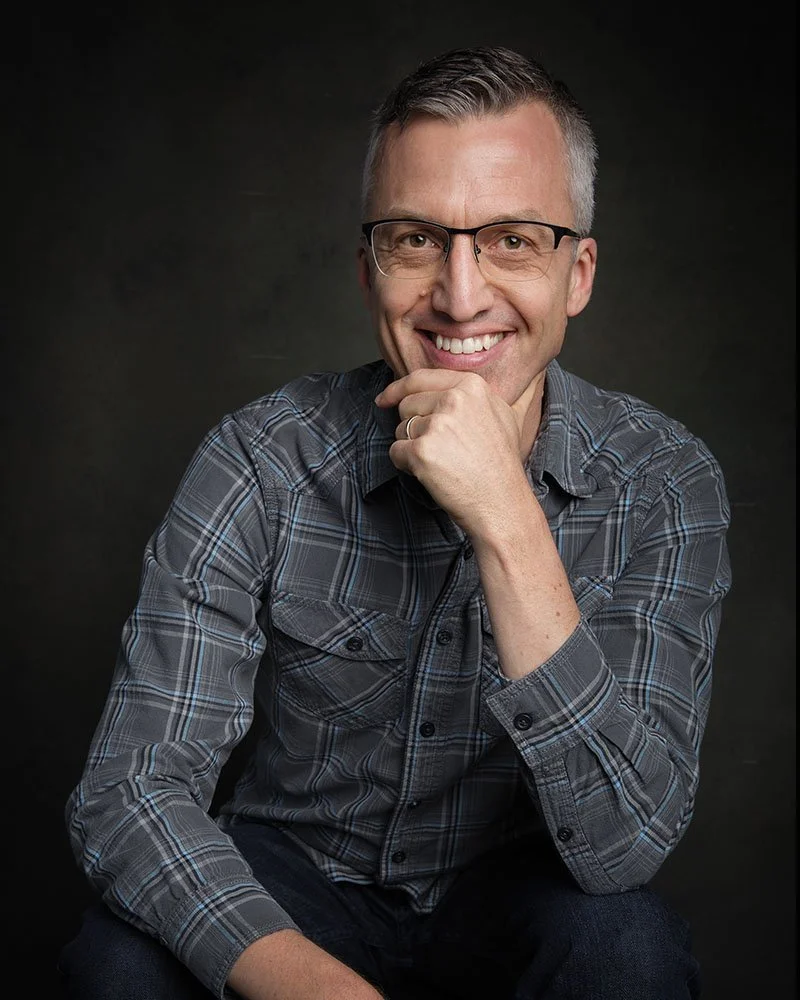
About Fritz Liedtke:
Fritz began photographing when he was a teen, and art has played a profound part in his life. His personal and professional photography have been widely published in places like National Geographic, Huffington Post, and The New York Times, and is shown in galleries and collected by museums and collectors around the world. His work aims to tell the quiet human stories that often go unheard, with sensitivity and compassion.
See his professional work here, and his fine art projects here.

About our Team:
This project would never have left the ground without the faith and determination of 4 women, who continue to volunteer their time and passion to make this project come to life: Martina Klimova (with whom I went to art school many years ago, and who didn’t think my initial idea for this project was too crazy), Oksana Dolga (whose passion and compassion for youth and community-building knows no bounds), Tanya Sushko (who found and coordinated over 60 youth, and assisted me daily, often without sleep), and Andrea Svobodova (an anthropologist passionate about telling the stories of immigrant youth). I could not have asked for a better group of kind-hearted, hard-working, fun-loving Czech and Ukrainian women to work with.
Contact Fritz
Thank you for your interest in Portraits of Resilience. I look forward to hearing from you: